

Amanda Bradley,
MS, LPCC, NCC
Hi, I’m Amanda.
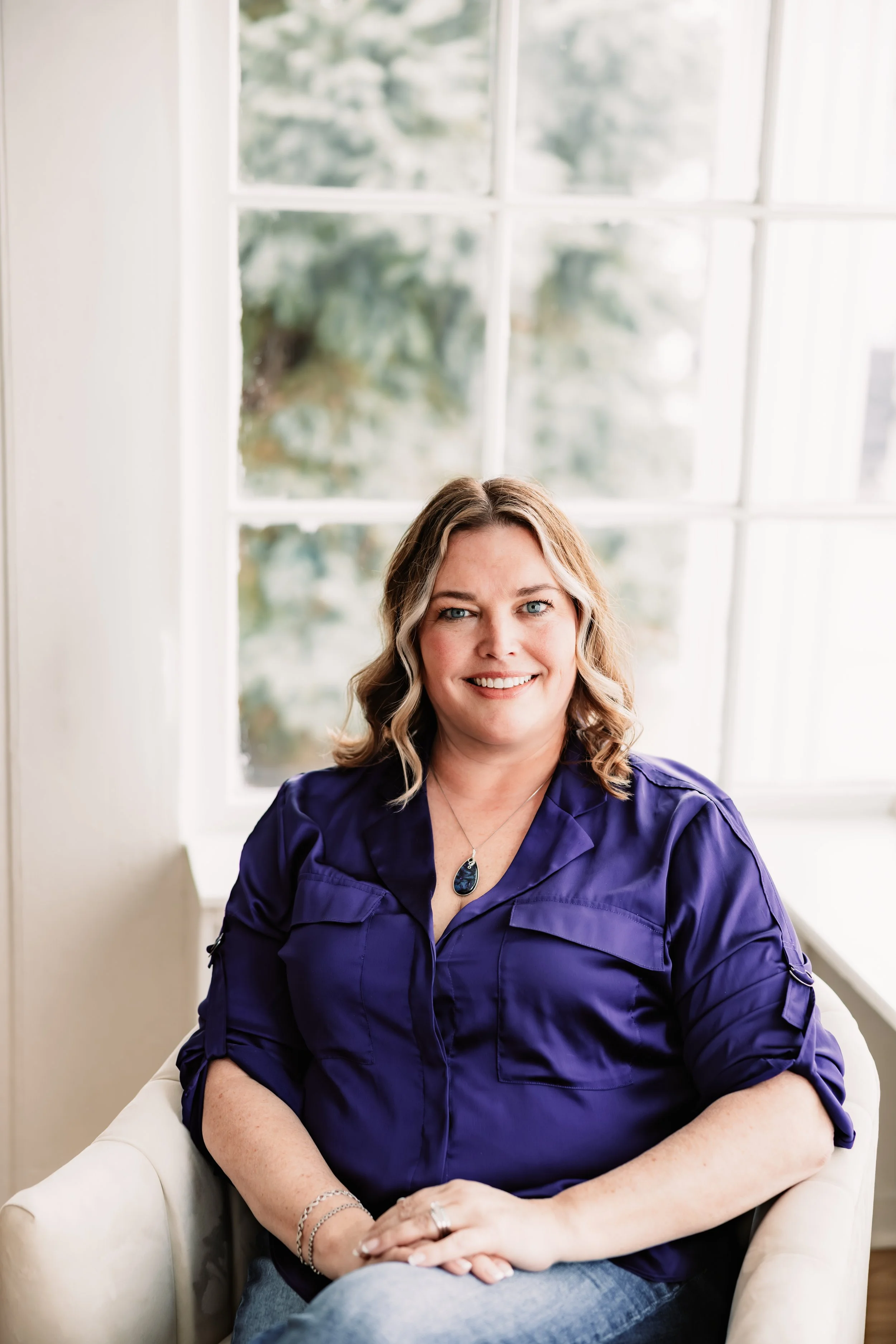
Like everything I do in life, I chose the scenic route to becoming a counselor, and I think that has helped me to become the educator and clinician I am today.
I spent over twenty years in law enforcement and retired as a Sergeant before entering the mental health field. My law enforcement background gave me something that no graduate program could have: a firsthand understanding of what it means to operate in high-stakes, high-stress environments and what it costs people when they do it for too long without support. I have seen trauma impact lives and helped to support the victims and survivors. I have worked in a culture where you are trained to push through hardships and find a solution on your own to problems that stem from repeated exposure to trauma. And I have witnessed the profound healing that happens when people seek the treatment that they deserve.
That experience has shaped everything I do today. I am a Licensed Professional Clinical Counselor, an EMDR therapist, a mental health practice owner, and a doctoral student studying Counselor Education and Supervision. My work is centered on helping people understand their experiences, build resilience, and create the life that they want. I bring the same directness, grounded presence, and genuine investment into the classroom that I bring into the counseling room.
This portfolio reflects that journey. The clinical work, teaching, leadership, and continued growth that I have enjoyed as a lifelong learner. This portfolio is more than just a record of what I have accomplished. This is a picture of where I have been, where I am going, and why this work matters so deeply to me.
Teaching Philosophy
Empowering learners to exceed their expectations. Effective teaching is relational. This is something I learned long before I ever stood in front of a classroom. After more than twenty years as a first responder and years as a mental health clinician, I know what it feels like when someone truly shows up for you, and I know what it costs when they don't. People grow in relationships. They take risks when they feel safe, they ask the hard questions when they feel respected, and they push past their own limits when someone in the room genuinely believes they can. I carry that understanding into everything I do as an educator. My classroom is not just a place to learn counseling, it is a place to experience what a good relationship actually feels like, because that is the very foundation of the work we are preparing to do.
Relational.
As Julius Caesar said, "Experience is the teacher of all things."
I’ve lived this across two very different careers, and it has never stopped being true. You cannot learn to sit with someone in their darkest moment by reading about it. You have to practice it, feel the discomfort of not knowing what to say, get feedback, and try again. That is exactly what I invite my students into. Real practice, honest reflection, and the kind of learning that stays with you long after the course ends. Theories, textbooks, and notes cannot bring the same knowledge that experience teaches. I draw on my work in EMDR, trauma-informed care, and crisis response not to impress, but to bridge the gap between theory and the messy, meaningful reality of clinical work.
Experiential.
People are capable of far more than they believe and I’ve been a witness to this. Every student who comes into my course carries more capability than they realize, and my job is simply to create the space where they can discover that for themselves. I push, I challenge, and I hold high standards but always with the belief that my students are fully capable of meeting them.
My goal is simple; it’s to empower learners to exceed their own expectations.
To leave not just with stronger skills, but with a clearer sense of who they are and the kind of counselor they are becoming.
Empowering.
Teaching in Practice
This video gives a brief look into my teaching style and how I engage students through discussion, reflection, and experiential learning.
Supervision
Supervision has become one of the parts of counselor education that I value most. It creates space to slow down, think more deeply about our work, ask difficult questions, and continue growing into the counselors we hope to become.
I don't believe supervision is about having all the answers. I believe it's about creating a relationship where learning feels safe, honest, and challenging in all the right ways. Some of the greatest growth happens when we're willing to acknowledge what we don't know, reflect on our experiences, and remain open to feedback.
The following Informed Consent for Supervision reflects the philosophy that guides my work as a supervisor. It outlines my approach to the supervisory relationship, my expectations, and my commitment to supporting supervisees as they continue developing their clinical skills, professional identity, and confidence while providing ethical, client-centered care.
The Association Between Campus Leadership Positions and Educational Aspirations Among College Students
This quantitative research study explored the relationship between campus leadership involvement and educational aspirations among college students. Using a chi-square analysis, the study examined how leadership experiences may influence long-term academic goals, motivation, and student development.
Included Materials:
Research
I am interested in exploring topics related to leadership and development, particularly within collegiate student-athletes.
As I continue through my doctoral program in Counselor Education and Supervision, I look forward to developing these interests further and engaging in research opportunities that align with my clinical and professional background.
Leadership & Advocacies
Leadership, for me, has never been a title, it has been a practice.Leadership, for me, has never been a title; it has been a lifestyle and an honor.
I spent over 20 years in law enforcement, retiring as a Sergeant. In that role, I supervised officers, oversaw field training, led community engagement efforts, and served as a Wellness Coordinator at a time when officer mental health was rarely discussed openly. I also led investigations into some of the most serious and sensitive cases an officer can work, including child abuse and sexual assault, and served as a certified instructor through the Ohio Peace Officer Training Academy, training officers in human relations, trauma response, community engagement, and diversity, equity, and inclusion. That combination of frontline experience and formal instruction is something I carry into every teaching and training space I enter today.
Alongside my law enforcement career, I served as Program Director for the Spring Green Educational Foundation, where I built and led a youth diversion program for at-risk teens and their families. I was involved in hiring and training staff, facilitating interventions, and working with families during some of their most critical moments.
When I transitioned into the mental health field, leadership remained central to my work. As Director of Residential Services at Talbot Health Services, I oversaw a residential treatment program for women recovering from various addictions, supervised case managers, conducted assessments, and coordinated care for clients with complex needs.
Today, I am the owner of my own private practice, home to eight clinicians and two supervisors. I continue to lead by making intentional decisions about culture, care, and the kind of clinical community I want to build.
My advocacy work is an extension of this leadership. I have served as President of Walden LGBTQ+ PRIDE since 2020, supporting inclusion and community within academic spaces. Additionally, I served as Board President of AWAKE, a drug education and prevention community coalition. I have also presented at the Chi Sigma Iota Learning Conference, bringing practitioner experience into academic conversation, which feels very much like where my two worlds meet.
My counseling experience spans both residential and outpatient settings. I began my career as a counselor as Director of Residential Services at Talbot Health Services. I provided direct clinical care to residential and outpatient clients, conducted diagnostic assessments, reviewed and updated treatment plans, and coordinated care for clients with complex and layered needs.
From there, I built my own clinical practice. Through Bradley Solutions, LLC, I provided outpatient counseling services across multiple practice settings before opening Fallen Timbers Holistic Services (FTHS) in 2024. FTHS is a private practice that has grown to include eight clinicians and two supervisors. FTHS has allowed me to support counselor trainees while they apply their skills during field experience. I emphasize the importance of trauma-informed, client-centered care while encouraging each trainee to cultivate their own counselor identity. Building FTHS from the ground up and watching it grow into a real clinical community has been one of the most meaningful things I have done in my life.
Starting therapy is a big step, and sitting with someone who genuinely gets it makes all the difference. My experience in law enforcement has helped me understand what it means to carry a weight most people never see. I understand the culture that tells first responders to push through, stay strong, and keep it together because I lived inside that culture for two decades. That experience does not just inform how I practice; it shapes how I show up in life. I am direct and warm, steady under pressure, and deeply committed to creating a space where clients, especially those who have spent years putting everyone else first, can finally feel safe and exhale.
I work with clients from diverse backgrounds who experience a wide range of concerns. I am passionate about supporting first responders and women in midlife. Two populations I understand not just clinically, but personally.
As an EMDR therapist, I have helped clients find real relief from anxiety, depression, anger, and the effects of trauma so they can feel more grounded, hopeful, and like themselves again. My approach blends EMDR, CBT, and mindfulness within a person-centered, trauma-informed framework. I follow your lead, meet you where you are, and work with you, not at you.
My goal has always been the same: to make the process of healing feel a little less overwhelming, and a lot more possible.
Counseling
Writings
A Teaching Philosophy for Counselor Education: Integrating Experiential Learning, Relational Practice, and Leadership Development
This paper explores my philosophy of counselor education through the lens of experiential learning, psychological safety, leadership development, and relational practice. Drawing from both professional and academic experience, the paper examines how counselor educators can foster reflective, ethically grounded, and socially conscious clinicians.
“Find what makes people shine, and start polishing.”

To me, that means working with people in a way that helps them feel empowered, then continuing to support and challenge them until they’re ready to stand confidently on their own.

— Amanda Bradley